
Turner Field Stadium Neighborhoods LCI
This project was completed prior to JFG Cities. Images are the property of Perkins&Will. Text is adapted from the final project report.

Aerial of the Turner Field Stadium Core Area Proposed Plan

Study Area

Overview.
The Livable Centers Initiative (LCI) is a program led by the Atlanta Regional Commission (ARC), which serves as the regional planning and intergovernmental coordination body for the 10-county Atlanta metropolitan area. The program offers competitive planning and implementation grants to local governments and nonprofit organizations with the goal of strengthening communities by easing traffic congestion, improving air quality, and creating stronger links between residential, commercial, and employment areas.
The Turner Field Stadium Neighborhoods LCI differed from a typical LCI study in both scale and context. Positioned near the center of the Atlanta region, the planning area included the former Centennial Olympic Stadium, later used by the Atlanta Braves, along with several historic neighborhoods that had experienced long-term impacts from past urban renewal efforts. Due to the significance and complexity of this area, ARC awarded this LCI the largest single-project funding allocation in the program’s two-decade history.
Following the Braves’ departure from the stadium and ongoing negotiations between the City and Georgia State University regarding the future of the site, this LCI effort became a highly anticipated planning initiative with the potential to significantly influence the future of Atlanta’s south side.
Community Engagement Process.
The planning team carried out a broad and nontraditional public engagement process that reached more than 1,600 residents and stakeholders. This effort generated essential input that helped inform a strong and forward-looking plan. Most importantly, the team created spaces for open dialogue that supported the development of a shared vision for the area’s future, one that balanced ambition with practicality while honoring the site’s historic significance.


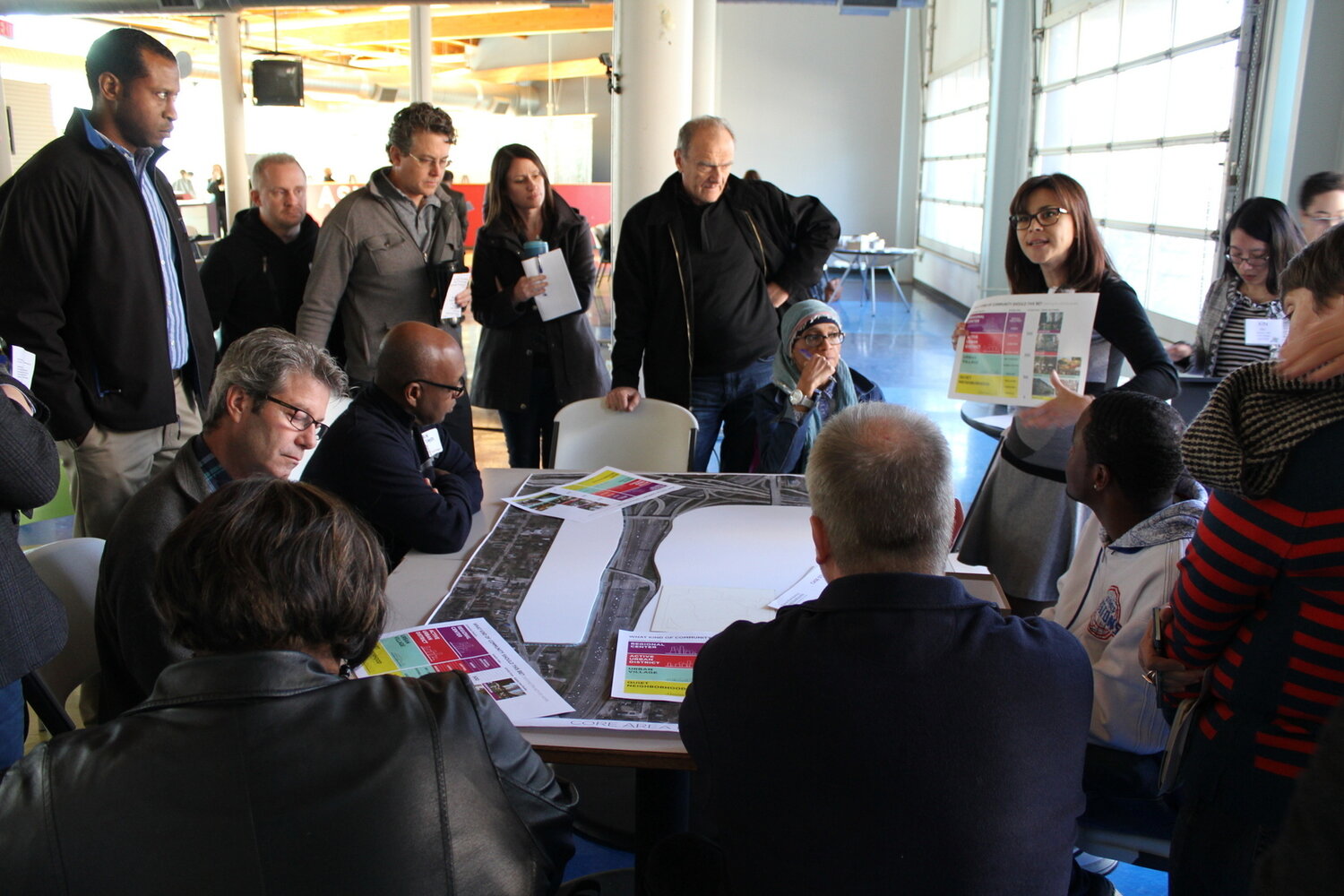


The Activity Score Exercise
-

-

During the Activity Score exercise, community members were shown a range of local examples that illustrated different development densities. Each density type was tied to specific services and assigned a numerical value. After participants selected the type of community they wanted to create, they worked to reach the target score using a three-dimensional model of the site and a mix of building types, such as multifamily housing and office buildings. Once the model was completed, a facilitator calculated the total score to determine whether the desired density had been met.
-

The community’s vision for the area was then converted into 13 design parameters, grouped into six categories, which were used to guide the development of the concept plans.

Flexibility and Density
Edges (Neighborhood and Interstate)
Public Open Space
Corridors and Transit
Legacy (Neighborhood and Sports)
Stadium Elements
The Concept Plans
-

Ballpark Plaza
This proposal organizes the area around a new public gathering space on Hank Aaron Drive designed to support transit use, biking, and everyday street activity. Food kiosks and outdoor seating help activate the plaza and encourage regular use. Just west of this space, a smaller square is dedicated to recognizing Hank Aaron’s home run and is aligned with Georgia State University’s baseball field. Between the two areas, market pavilions create a clear transition and provide opportunities for locally oriented shops and restaurants.
-

Big Park
This proposal frames the site with a ceremonial open space that protects long views toward the Gold Dome and incorporates the Olympic Cauldron in a new location. By aligning these features, the design links major chapters of Atlanta’s story, from Hank Aaron’s defining home run to the city’s Civil Rights history and Muhammad Ali’s Olympic torch lighting in 1996. Celebration Mall is planned as a flexible civic landscape that can host memorial installations, public programs, and large community events.
-

Neighborhood Squares.
This approach breaks the site down into a network of smaller civic spaces intended to reflect the scale and character of the historic neighborhoods that once defined the area. Each public square is positioned to tell a specific part of the community’s story through its location and design. One square draws directly from the legacy of Hank Aaron by reintroducing the infield of Fulton County Stadium as a commemorative element. This space is intentionally aligned with the baseball field at Georgia State University along Georgia Avenue, creating a symbolic connection between past and present.

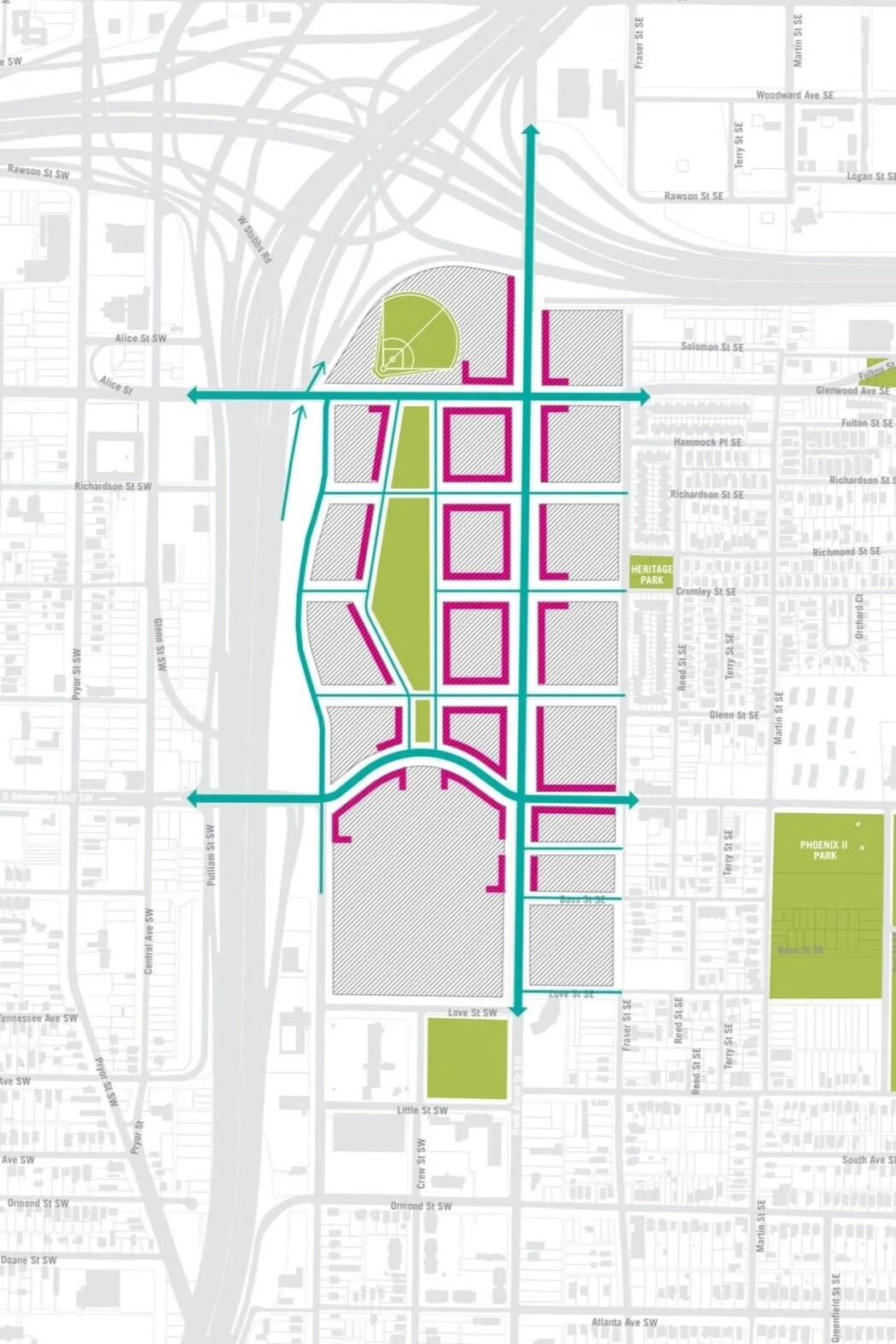

Streetscape Concepts
-

Hank Aaron Proposed Option 1
-
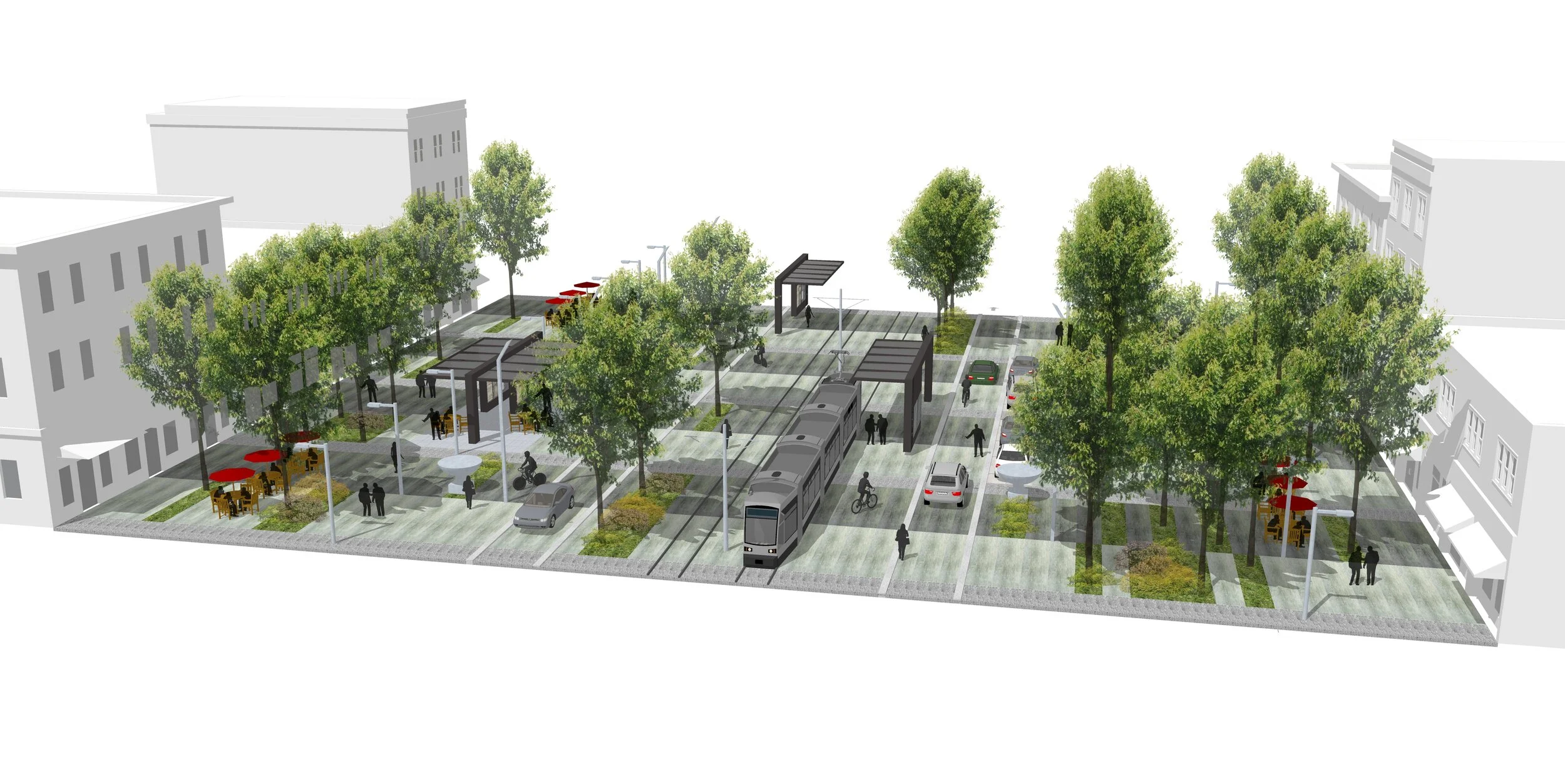
Hank Aaron Proposed Option 2

Capitol Avenue Streetscape Improvements and Potential Development

Proposed Plaza Space along Capitol Avenue
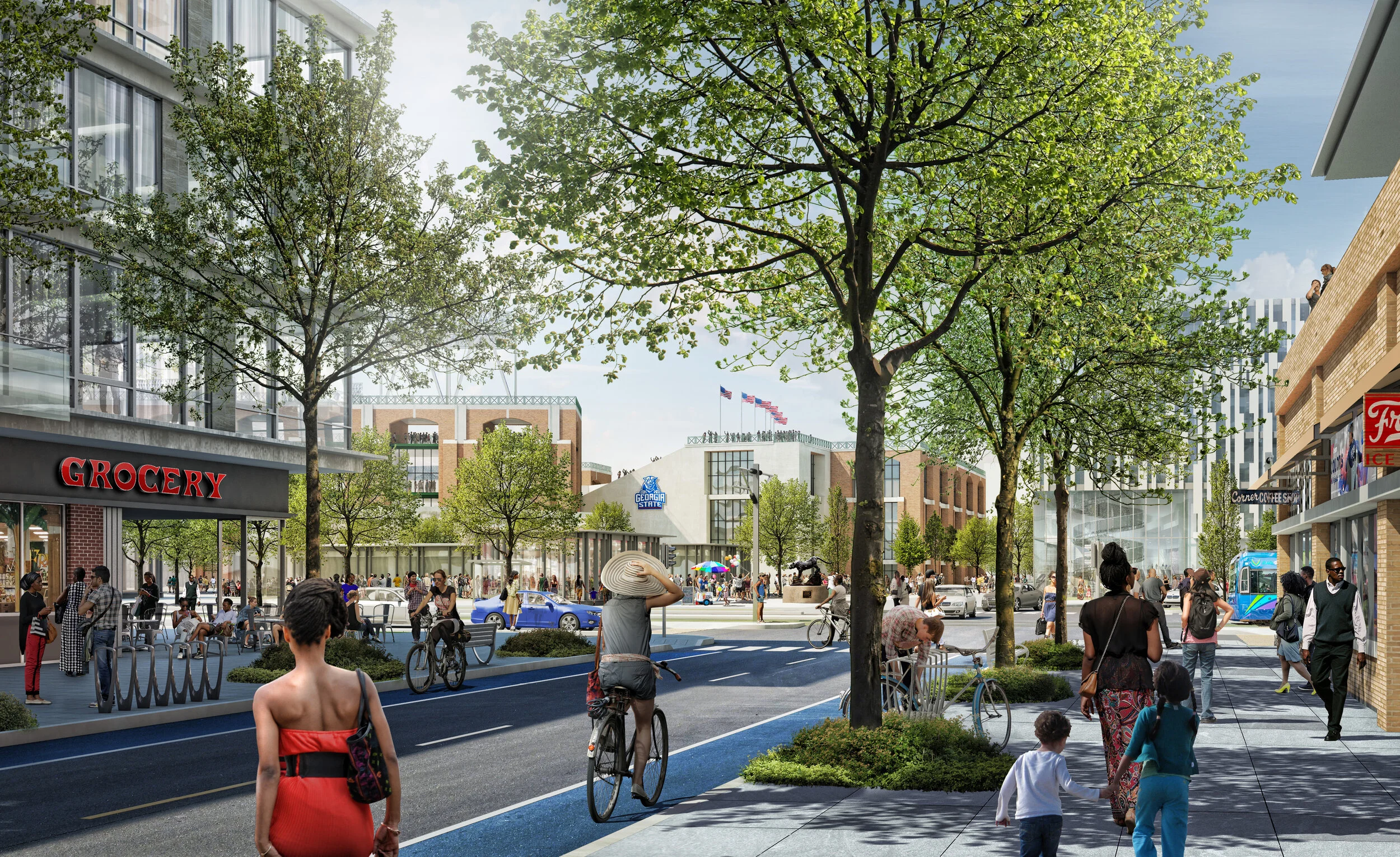
Georgia Avenue Streetscape Improvements and Potential Development
Project Summary:
My role: Urban designer and day-to-day Project Manager
Client: City of Atlanta and Invest Atlanta
Images and Video Credit: Perkins&Will